


The gavel echoed in the cavernous courtroom, a punctuation mark to the lawyer’s impassioned plea. Judge Elara stared, not at the man before her, but at the sun filtering through the stained glass, casting a kaleidoscope of colors on the worn oak desk. Her mind, however, wasn’t lost in the spectacle. It wrestled with a serpent, one that had gnawed at her since her first gavel strike: the serpent of absolutes.
The law, the code she swore to uphold, was supposed to be an unyielding shield against chaos. Yet, etched within its cold, rigid script, she saw only fragments, snapshots of human behavior captured in a bygone era. Life, Elara knew, flowed like the river outside her window, ever-changing, defying neat categorization.
The case before her was a testament to that fluidity. A young scientist, accused of manipulating time, stood defiant, his eyes mirroring the turmoil in her own chest. The law was clear: tampering with the timeline was forbidden. But was it just? Elara saw not a villain, but a man driven by the desire to save his dying wife, a desire as old as humanity itself.
The serpent hissed, reminding her of her oath. But another voice whispered, one she’d silenced for years: the voice of her conscience. It spoke of empathy, of understanding the desperate dance between love and transgression. The law, she realized, was a tool, not a tyrant.
That night, under the vast canvas of the starlit sky, Elara made a choice. She delved into ancient texts, not for legal precedents, but for forgotten philosophies. She unearthed stories of Antigone defying the king’s laws for the sake of her brother, of Socrates accepting death rather than compromising his beliefs. These were not criminals, but testaments to the human spirit’s refusal to be confined by absolutes.
In the courtroom, bathed in the pale morning light, Elara delivered her verdict. Not an acquittal, but a challenge. She acknowledged the law’s letter, but also its limitations. The scientist, she declared, would face a different kind of justice – one measured not by clauses and articles, but by the collective conscience of his peers.
The murmurs of dissent were quickly drowned by the thunderous applause of a community yearning for something more than cold pronouncements. As the scientist walked free, not absolved, but understood, Elara knew she had taken a step away from the rigidity of the law and towards the messy, beautiful truth of humanity.
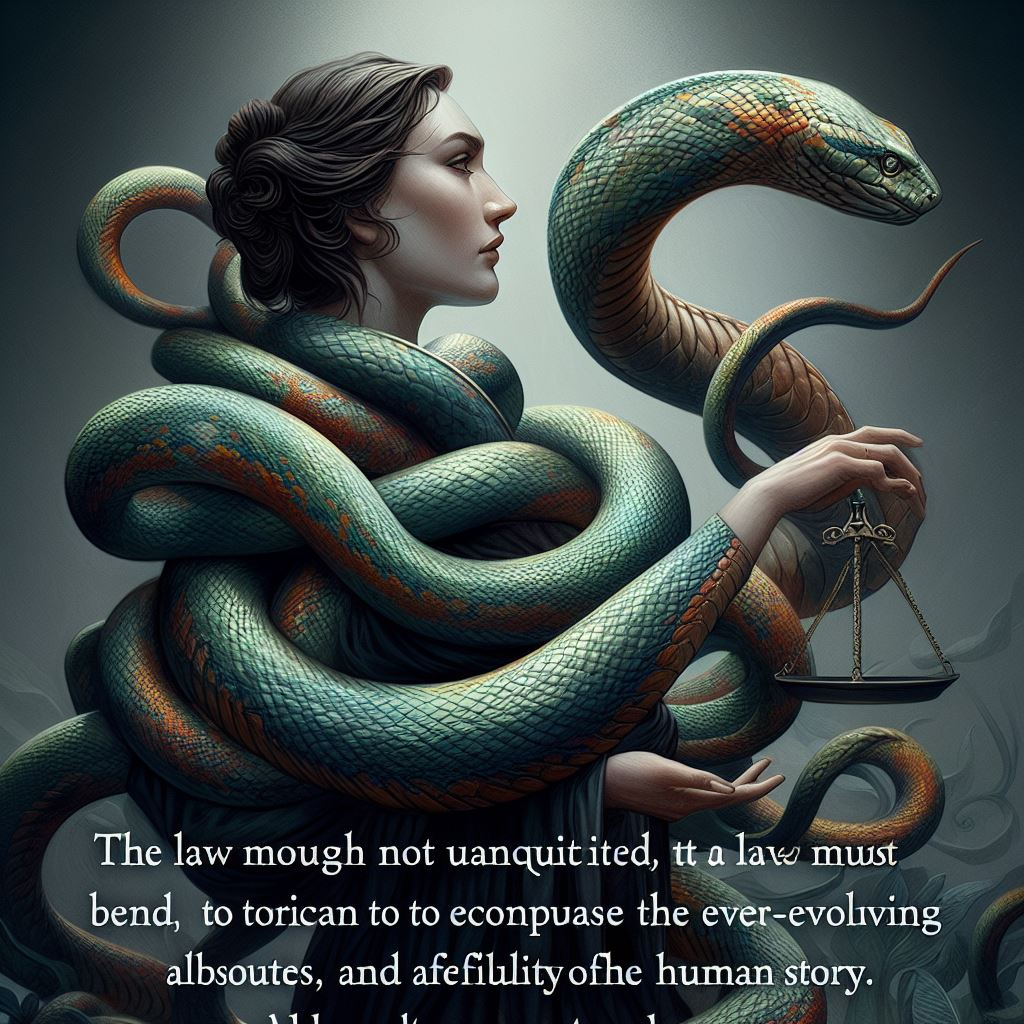
The serpent, though not vanquished, no longer constricted her. Instead, it served as a reminder: The law must bend, not break, to encompass the ever-evolving human story. And the role of a judge, she realized, wasn’t to impose absolutes, but to navigate the intricate dance between justice and the fluidity of life. The gavel would fall again, but each echo would carry not just the weight of the law, but the whispers of understanding and the yearning for a justice that transcended the rigidity of the written word.

 Bhyllabus l'énigme
Tinggalkan komentar