


The wind was Kai’s first lullaby, the scent of sun-baked clay his earliest perfume. Born and raised in the cradle of a vast desert, he breathed its dust, danced with its shifting dunes, and learned its secrets under the harsh gaze of a relentless sun. He knew the whispers of the wind carrying ancient stories, the language of cracks in the earth that spoke of droughts and deluges. The land, they said, molded its people. Yet, a question bloomed in Kai’s mind like a stubborn cactus: Was his love for this unforgiving yet magnificent expanse a choice or a consequence?
He felt the pull of its beauty acutely. The sunrise, a fiery explosion bathing the dunes in liquid gold. The nights, a velvet dome studded with a million diamond stars. The silence, vast and profound, whispering of time’s indifference. Yet, the land demanded much. Survival was a constant dance, water a precious pearl, and unforgiving storms, harsh teachers.
One year, a relentless drought descended. The land, once vibrant, became a skeletal shadow. Hunger gnawed, hope dwindled, and whispers of leaving grew louder. Yet, when Kai gazed at the parched earth, he saw not just hardship, but resilience. He saw his grandmother, weathered yet unyielding, drawing life from the desert’s hidden veins. He saw the community, bound by shared struggle, their love for the land forged in fire.
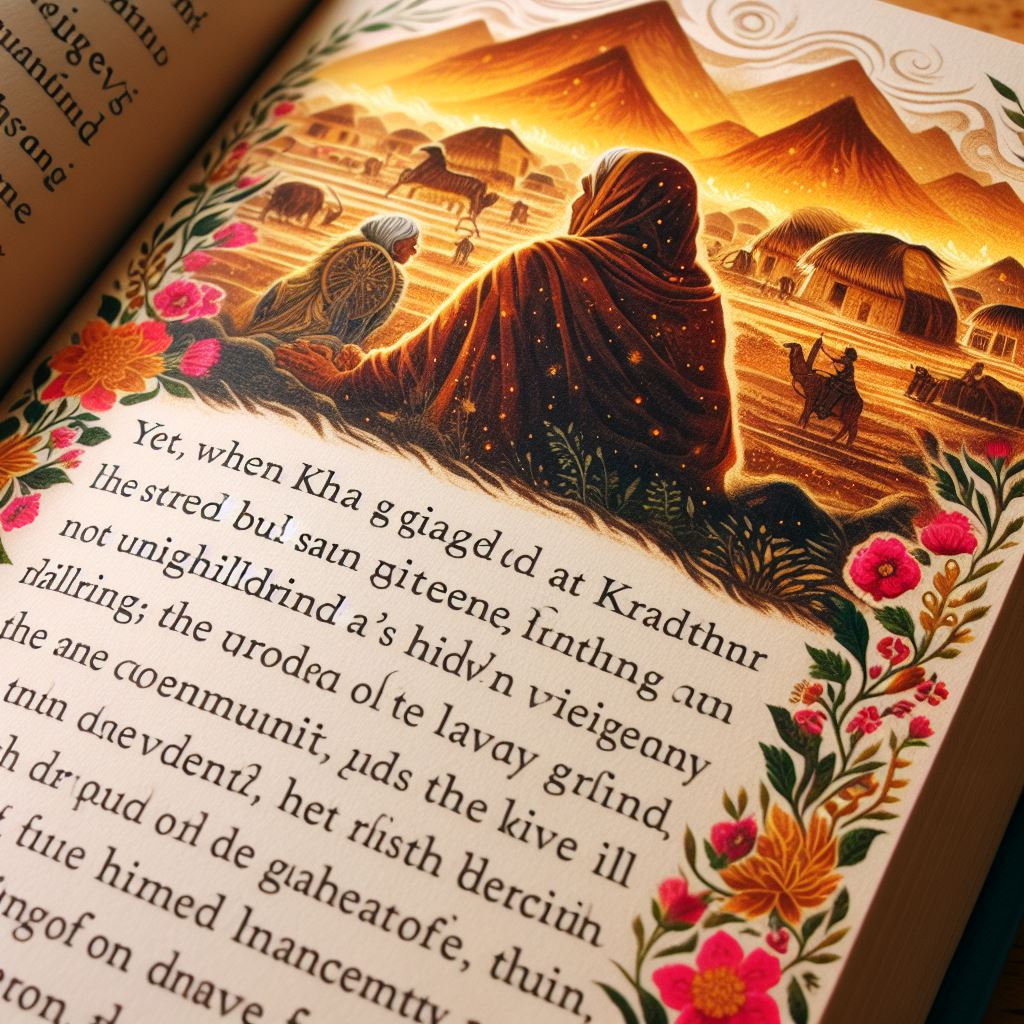
Leaving wasn’t just abandoning a place, he realized; it meant severing a connection woven into his very being. The land hadn’t just shaped him; it had birthed him, shaped his values, his resilience, his understanding of life’s cycles. His love wasn’t blind rhetoric; it was the song of his soul, a symphony composed of wind, dust, and starlight.
One day, rains returned, and the desert bloomed anew. Kai, though, chose a different path. He traveled, carrying the wisdom of the land within him. He shared its stories, its harsh beauty, its lessons of endurance. He spoke of the love one could find in the most unexpected places, a love not born of blind loyalty, but of deep understanding and shared struggle.
The land molded him, yes, but Kai, in turn, shaped his love for it. His love wasn’t a product of rhetoric or philosophy; it was a melody played on the strings of his being, a song born from the dust and wind, a testament to the unbreakable bond between a man and his land. As the wind carried his message, Kai knew: love wasn’t about blind devotion, but about seeing the beauty within the struggle, embracing the lessons etched in every grain of sand. And that, he knew, was a love worth cherishing, wherever his journey might lead him.
 Bhyllabus l'énigme
Tinggalkan komentar