


Elara, a weaver from a village nestled between rolling green hills, was known for her vibrant tapestries. But Elara lived in two worlds. One, woven with vibrant threads, the other shrouded in whispers and shadows. Her village was steeped in superstition. A spilled salt shaker meant misfortune, a hooting owl a harbinger of death.
Elara, however, felt a disquietude with these pronouncements. One day, while collecting wildflowers for her dye, she stumbled upon a hidden grove. In its heart stood a gnarled, ancient oak, its branches draped with trinkets – offerings to appease the fickle spirits said to reside there. Elara, defying the village warnings, entered.
There, she met Silas, an old astronomer who lived in a ramshackle hut bordering the grove. He scoffed at the villagers’ superstitions; his gaze fixed on the vast tapestry of stars visible through the canopy. Silas became Elara’s secret teacher. He spoke of the cosmos, the predictable dance of the heavens, the power of logic and observation.
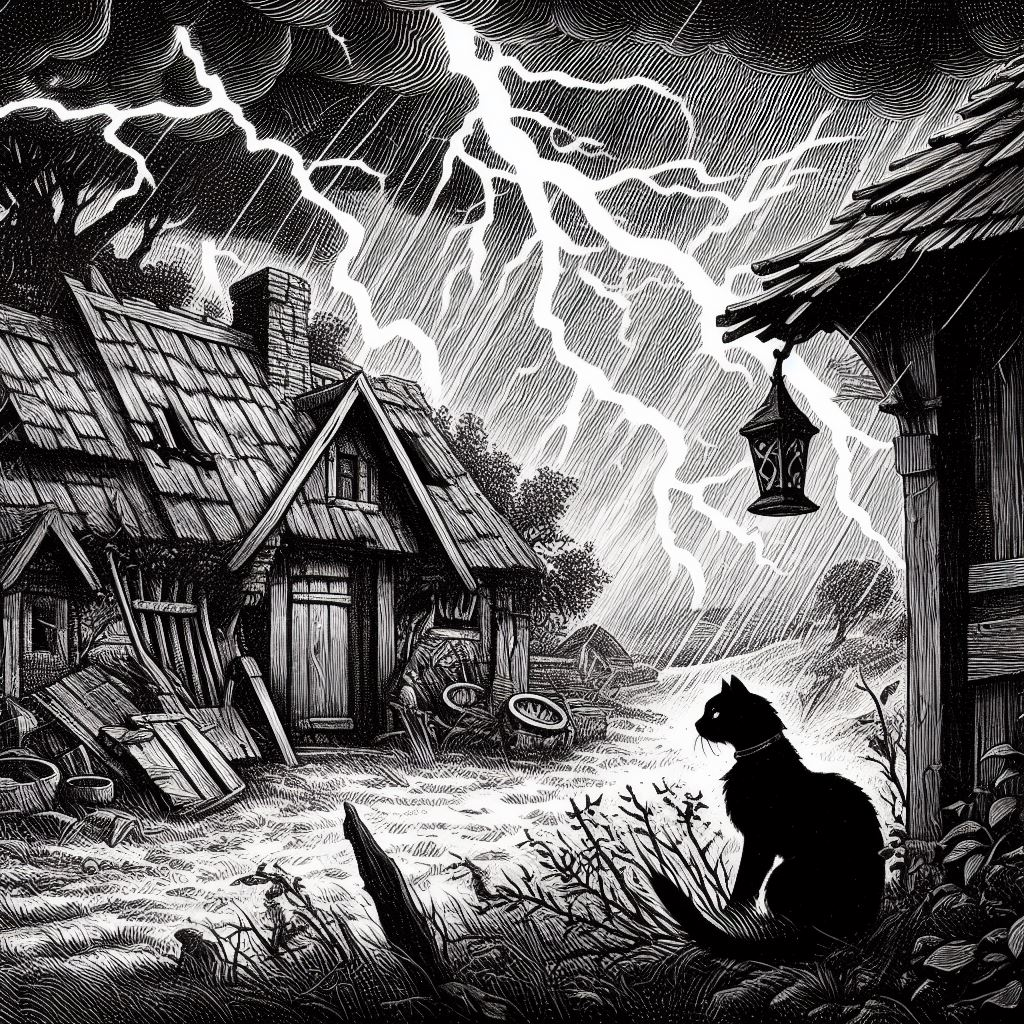
Elara’s world expanded. She began noticing patterns in nature’s seemingly random occurrences. The “unlucky” black cat was simply seeking warmth; the “ill-omened” thunderstorm a natural cleansing. As Elara’s tapestry reflected the constellations Silas taught her, a conflict brewed within her.
One harvest season, a plague swept through the village. Panic ensued. People clung to their superstitions, refusing to leave their homes, fearing malevolent spirits. Elara, remembering Silas’s teachings about hygiene and the spread of illness, decided to act.
She donned a mask – a scrap of fabric dipped in herbs Silas recommended – and ventured out, cleaning the sick and teaching others about sanitation. The villagers, clouded by fear and superstition, initially ostracized her. But as Elara, guided by reason, helped contain the plague, a hesitant trust began to form.
Elara’s journey wasn’t easy. She faced scorn and accusations of defying tradition. Yet, by questioning superstitions and embracing reason, she not only saved lives but also challenged the status quo. The villagers, witnessing the power of logic and observation, began to shed their fear and look at the world with new eyes.
Elara’s tapestries, once vibrant with folklore, now held a deeper meaning. They depicted constellations, the phases of the moon, a testament to the beauty and predictability of the universe. Her story became a beacon, a reminder that true understanding lies not in appeasing unseen forces, but in the courage to question, observe, and act with clear judgment. For only then can we weave a path towards a brighter future, not dictated by shadows, but illuminated by the light of reason.
 Bhyllabus l'énigme
Tinggalkan komentar