


In the journey of life, each step we take is a footprint on the tapestry of our existence. To tread this path wisely, one must don both the mind and the heart—not one, but both—as essential companions. The mind, with its reason and logic, is the compass that points us toward clarity and understanding. The heart, with its passion and empathy, is the map colored with the hues of our deepest desires and connections. Separately, they are instruments; together, they compose the symphony of a well-lived life.
Imagine a sailor navigating the vast ocean. The stars above offer guidance, much like the mind provides direction through knowledge and reasoning. Yet, it’s the wind filling the sails—the invisible force of the heart—that propels the ship forward. Without the stars, the sailor is lost; without the wind, he is stagnant. So, it is with us. The mind without the heart leads to a cold calculation, decisions made in the vacuum of emotion. The heart without the mind can drift into chaos, driven by impulse without anchor.
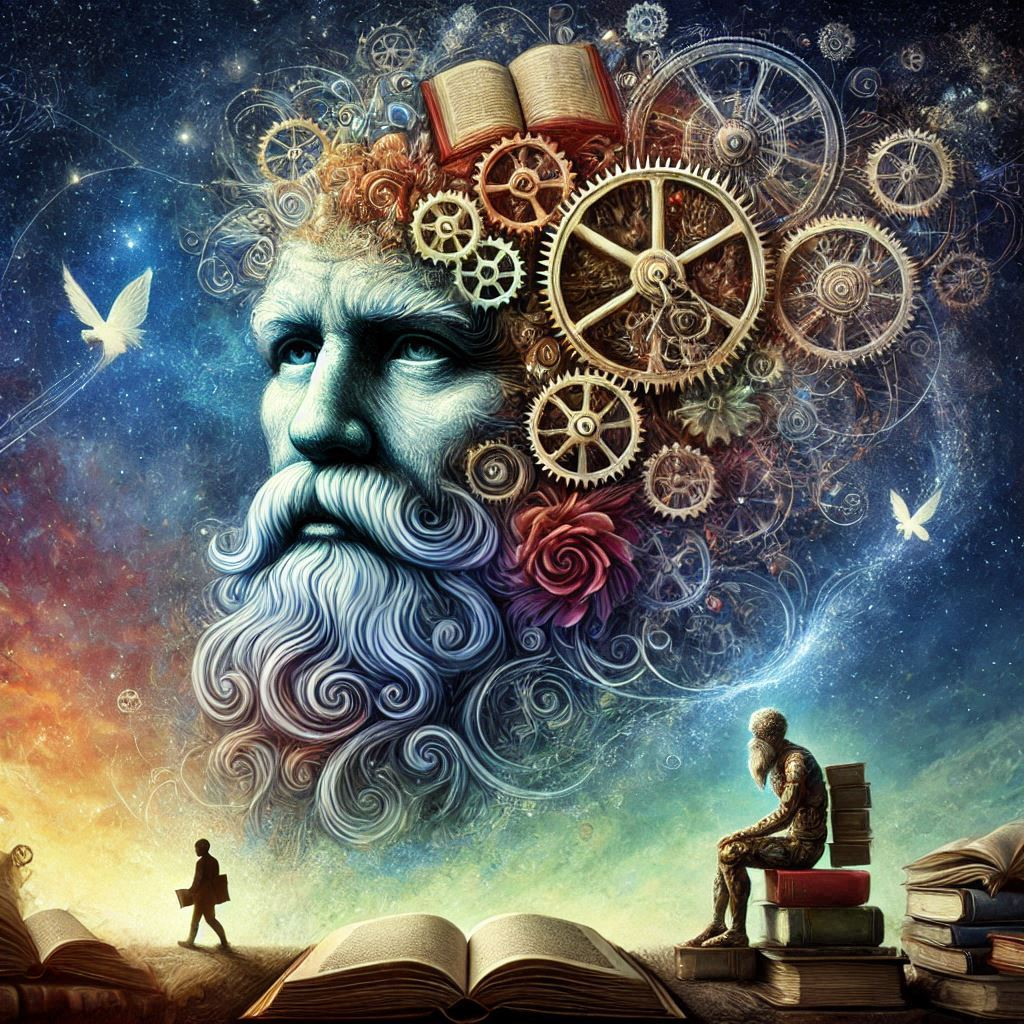
Throughout history, figures who have worn both their mind and heart have left indelible marks on the world. Think of Mahatma Gandhi, whose rational strategies for nonviolent resistance were deeply rooted in compassion and empathy for his people. His mind crafted the path; his heart fueled the journey. Albert Einstein, a paragon of intellect, was also guided by a profound sense of wonder and a desire for unity among humankind. Their legacies teach us that greatness is achieved not by intellect or emotion alone, but by the harmonious integration of both.
In our personal lives, this balance manifests in daily choices. When faced with a difficult decision—perhaps a career change, a relationship crossroads, or a moral dilemma—we often feel a tug-of-war between what we think and what we feel. Leaning solely on logic might lead us to overlook the nuances of our emotions and the impact on others. Conversely, acting only on emotion might cloud our judgment of potential consequences. By consciously engaging both faculties, we can navigate complexities with wisdom and compassion.
Moreover, relationships thrive when we bring both mind and heart to the table. Effective communication requires the clarity of thought to express ourselves and the empathy to listen and understand. In conflicts, the mind helps us identify solutions, while the heart reminds us of the value of the connection we share with others.
Embracing this duality also enriches our inner world. The mind seeks purpose and growth, driving us to set goals and pursue knowledge. The heart seeks fulfillment and joy, urging us to find meaning and experience love. Together, they propel us toward a life that is not just successful by external measures, but also truly satisfying on a deeper level.
Cultivating the Balance
- Mindfulness Practices: Engaging in activities like meditation or journaling can help synchronize the mind and heart. These practices foster self-awareness, allowing us to recognize when one is overshadowing the other.
- Continuous Learning: Nourishing the mind with knowledge keeps our perspectives fresh and informed. It equips us with the tools to analyze and understand the world around us.
- Emotional Intelligence: Developing skills like empathy, self-regulation, and social awareness enhances our ability to connect with others and navigate emotional landscapes.
- Reflective Decision-Making: Before making significant choices, take time to consider both rational analysis and emotional resonance. Ask yourself not just “What makes sense?” but also “What feels right?”
A Personal Anecdote
Consider the story of a man at a crossroads in his career. He excelled in his corporate job, where logic and strategy reigned supreme. Yet, he felt an unshakable pull—a desire to create art, to paint the dreams that filled his heart. Logic dictated that he stay the course for financial security, but his heart yearned for creative expression. After much introspection, he found a way to balance both: he continued his job but carved out dedicated time for his art. Eventually, his paintings began to speak to others, opening doors he hadn’t imagined. By wearing both his mind and heart, he crafted a life rich in both purpose and passion.
The Wider Implication
In a world often divided by extremes, the union of mind and heart becomes even more crucial. It encourages us to approach global challenges—be it social injustice, environmental crises, or cultural conflicts—with pragmatic solutions infused with humanity and compassion. Policies shaped by intellect alone may overlook the human element, while actions driven solely by emotion may lack sustainability. Together, they can forge paths that are both effective and equitable.
In Closing
Wearing both the mind and heart is not merely advice but a philosophy—a way of being that honors the full spectrum of our humanity. It invites us to be whole, to engage the world with our complete selves. As we step forward on our paths, let us remember that it is in the intertwining of thought and feeling that we find our true compass.
Further Reflection
Have you noticed moments in your life where you leaned too heavily on either the mind or the heart? What might have changed if you had embraced both? It might be worthwhile to explore this balance in your daily decisions and see where it leads you.
Expanding the Conversation
- The Role of Intuition: Sometimes, the dialogue between mind and heart gives rise to intuition—a knowing that transcends explicit reasoning. Paying attention to this can provide valuable insights.
- Cultural Perspectives: Different cultures emphasize the mind-heart balance in unique ways. Exploring philosophies like Taoism or concepts like Ubuntu can offer deeper understanding.
- Impact on Well-being: Studies in psychology suggest that aligning thoughts and emotions contributes to mental health and reduces internal conflict.
By continually nurturing both aspects of ourselves, we don’t just walk through life—we dance, we soar, we truly live.
 Bhyllabus l'énigme
Tinggalkan komentar