
The Weight of Anchors
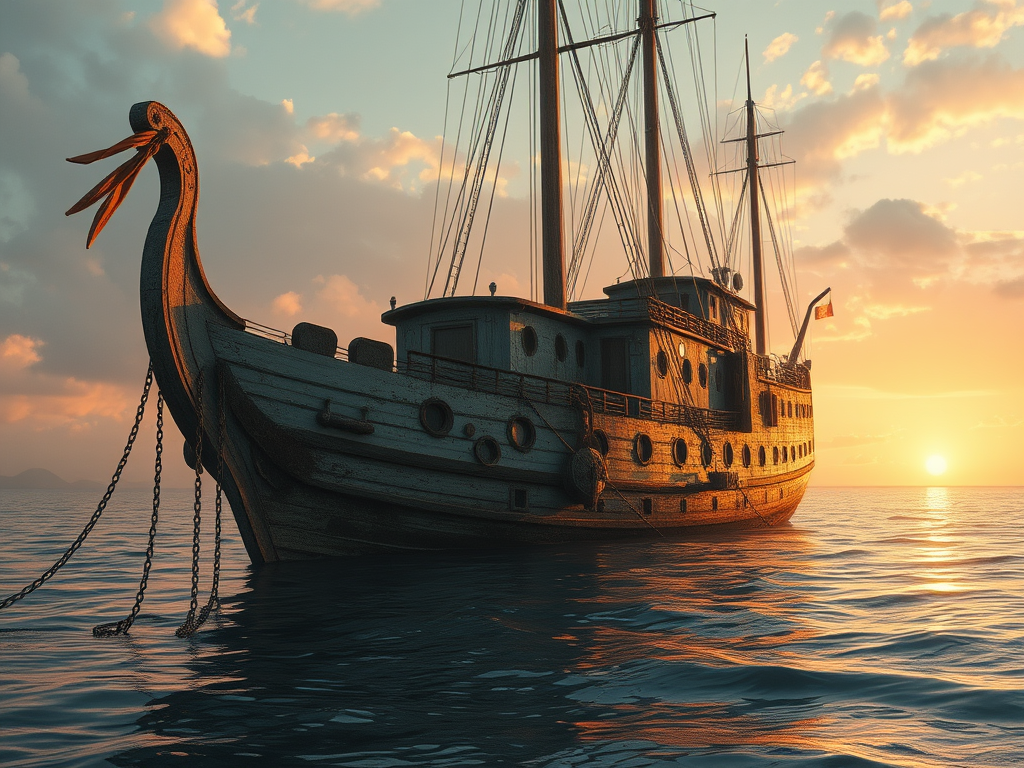
In the harbor of the human heart, grudges are like anchors we refuse to raise—heavy, corroded things that we drag behind us wherever we sail. But why do we cling to these burdens when they serve only to slow our passage through life’s vast waters?
Perhaps it begins with our primal need for justice. When someone wounds us, our hearts cry out for balance, for the scales to tip back toward fairness. The grudge becomes our talisman of righteousness, proof that we were wronged, evidence that our pain matters. We hold it close like a sacred relic, polishing it with repeated tellings, feeding it with fresh grievances until it grows from a splinter into a sword.
There’s a terrible comfort in grudges. They give shape to our suffering, transform our vulnerability into something that feels like strength. “See how I was wronged,” the grudge whispers. “See how justified your anger.” It becomes our identity’s dark companion, walking beside us through years, decades, sometimes entire lifetimes. We know ourselves as the one-who-was-betrayed, the one-who-remembers, the keeper of ancient wounds.
But grudges are hungry creatures. They demand to be fed with our thoughts, our energy, our peace. They insist on prime real estate in our minds, building elaborate monuments to past hurts. And strangest of all, we become attached to them—these parasites of the spirit—because releasing them feels like forgetting, like diminishing the importance of our pain, like letting the wrongdoer “win.”
The ship metaphor reveals the profound error in this thinking. A vessel is meant to ride upon the surface of troubles, not to take them aboard. When we allow resentment to flood our hull, we don’t punish those who hurt us—we only ensure our own sinking. The sea doesn’t care if we carry it within us; it simply is. But the ship, weighed down by what it was never meant to hold, loses its ability to navigate, to move forward, to reach new shores.
The wise captain learns to read the waters—to acknowledge storms without inviting them inside, to respect the sea’s power without surrendering to it. This doesn’t mean forgetting or excusing wrongs, but rather understanding that our vessel serves a greater purpose than being a museum of injuries.
Perhaps the deepest truth is this: grudges are often love turned inside-out. We hold them because someone or something mattered to us deeply, and in the breaking of that bond, we cannot bear to fully let go. The grudge becomes our way of maintaining connection, even if it’s through the dark thread of resentment rather than the golden cord of affection.
But love—true love, even love of ourselves—calls us to raise the anchor, to empty the bilge of bitterness, and to trust that the ship was built for sailing, not sinking. The horizon always offers new destinations to those brave enough to leave the harbor of their hurts behind.
The sea remembers every ship that has crossed its surface, but it does not hold them. In this, perhaps, lies the wisdom of letting go.
 Bhyllabus l'énigme
Tinggalkan komentar