A Cahya Legawa's Les pèlerins au-dessus des nuages

Prompt tulisan Bloganuary
Apa hal yang paling sering Anda keluhkan?

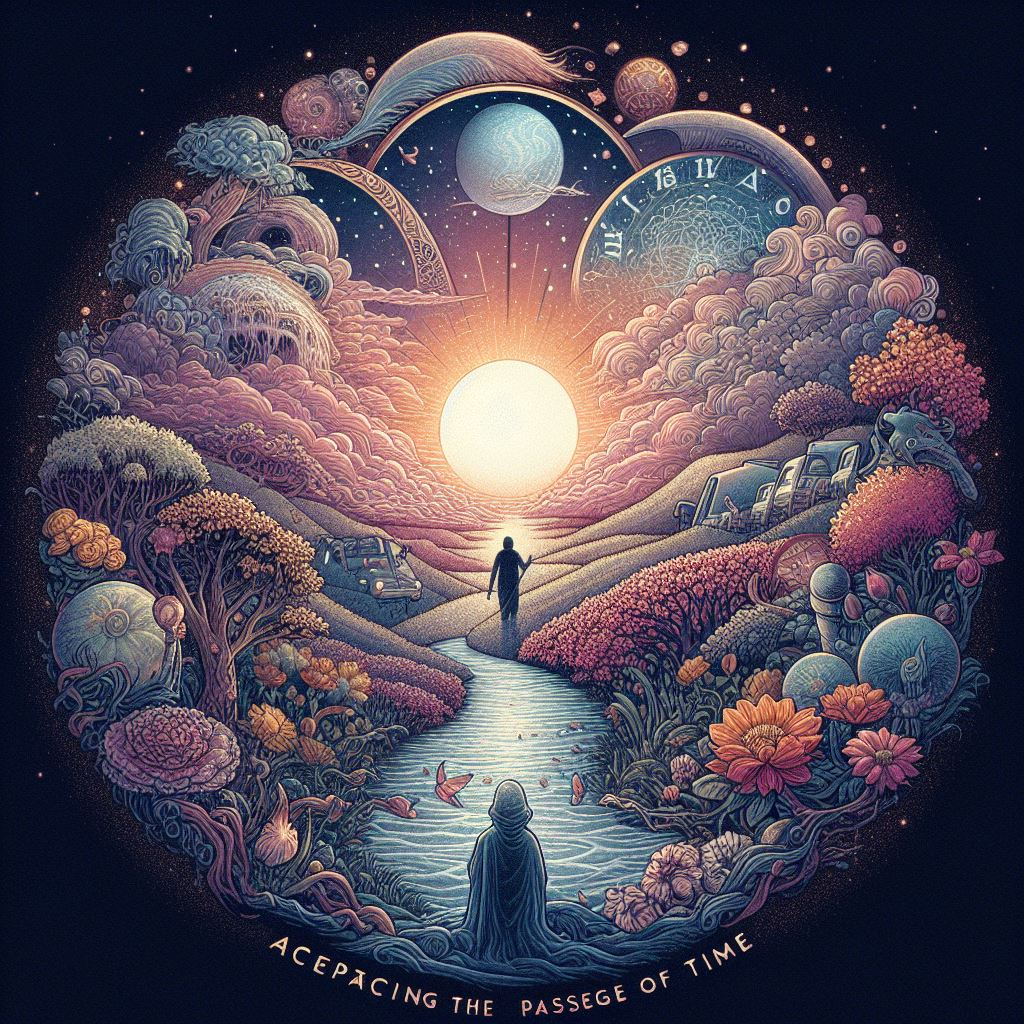
The sands of time, an hourglass held by an unseen hand, whisper of a paradox. They slip through our fingers with relentless haste, blurring moments into memories, seasons into years. Yet, in the labyrinthine corridors of thought, whispers of another truth echo: the ability to step back, retrace our steps, revisit those lost moments in the tapestry of the past.

Why then, does this fleeting pace of time provoke such lament? Do we mourn the inexorable march of seconds, the chapters turning in the book of our lives, or do we lament the choices we made, the paths not taken, the whispers of “what if” gnawing at our hearts?

Perhaps it is a confluence of both. We rail against the swift current of time, yearning for a pause, a chance to savor the fleeting breath of a perfect sunset, the unadulterated joy of a child’s laughter. We grieve the evanescence of experiences, the ghosts of yesterdays forever out of reach.

But intertwined with this lament is the echo of responsibility. Our past, though seemingly malleable in memory, is etched in the lines on our faces, the grooves in our hearts. It is the sum of our choices, the ink with which we paint the canvas of our being. To grumble at fate is to deny the brush we hold, the colors we choose.

But even within the confines of choice, is there not a whisper of redemption? Can we not glean wisdom from the missteps, find new pathways through the wilderness of regret? The answer, I believe, lies in the dance between acceptance and agency.

Accepting the passage of time does not equate to passivity. It is akin to acknowledging the rhythm of the universe, the ebb and flow that cradles both joy and sorrow. It is in this acceptance that we find the space to appreciate the fleeting beauty, the preciousness of each moment.
Yet, embracing agency does not necessitate a rejection of the past. Our choices, even the ones shrouded in shadows, have sculpted us, brought us to this very moment. We can learn from them, not to erase them, but to build upon them, to steer our present towards a future we choose.

So, let us not simply grumble at the inexorable passage of time, nor become prisoners of our past choices. Let us instead, like dancers in a cosmic ballet, accept the rhythm, own our steps, and move with grace towards the unfolding symphony of our lives. For in the tapestry of time, both the fleeting present and the echoes of the past hold the threads of a future waiting to be woven.

And perhaps, just perhaps, as we dance with the paradox of time, we might learn to slow its relentless pace, not by clinging to the past, but by savoring the present, and choosing wisely for the future.

Artikel Baru Terbit

  • Dunia dalam Diam: Memahami Ketulian dari Bilik Bersalin hingga Usia Senja
    Gangguan pendengaran menyunyikan dunia lebih dari 430 juta orang secara global, dan tak luput dari Indonesia. Dari skrining bayi baru lahir hingga kaitannya dengan risiko demensia pada lansia, artikel ini mengupas mengapa ketulian bukan sekadar “kurang dengar”—melainkan persoalan kesehatan masyarakat yang sebagian besar dapat dicegah dan ditangani sejak dini.
  • Ketombe: Ketika Kulit Kepala Bercerita Lebih dari Sekadar Gatal
    Ketombe bukan sekadar masalah kosmetik—ia hasil interaksi kompleks antara jamur Malassezia, produksi sebum, dan sawar kulit kepala yang terganggu. Di Indonesia, iklim tropis dan kelembapan tinggi membuat prevalensinya lebih besar dibanding banyak negara lain. Kenali kapan cukup diatasi sendiri, dan kapan perlu ke dokter.
  • CMV, Virus yang Bersembunyi di Balik “Flu Biasa” Kehamilan
    CMV, virus herpes yang menginfeksi mayoritas populasi tanpa gejala berarti, menjadi penyebab utama gangguan pendengaran kongenital non-genetik di dunia. Artikel ini mengulas epidemiologi CMV di Indonesia, tantangan skrining dan diagnosis, peran valasiklovir dan valgansiklovir, serta kegagalan vaksin mRNA Moderna 2025 yang mengguncang harapan pencegahan CMV kongenital global.
  • Mitos Medis: Menua Itu Pasti, tapi Merana Bukan Keharusan
    Menua itu pasti, tapi banyak “kebenaran umum” tentangnya ternyata mitos—dari olahraga yang katanya sia-sia hingga demensia yang dianggap tak terhindarkan. Artikel ini membedah tujuh mitos penuaan berdasarkan bukti ilmiah terbaru, sekaligus mengulas realitas populasi lansia Indonesia yang kian menua namun berpotensi tetap sehat dan produktif.
  • Tak Ada Level Aman Minum Alkohol: Yang Diungkap Tiga Studi Terbaru tentang Kanker, Otak, dan Risiko Kematian Dini
    Tiga studi terbaru 2026 menegaskan: tak ada batas aman minum alkohol. Dua gelas sehari menaikkan risiko kanker kolorektal 91%, konsumsi rendah tetap menurunkan aliran darah otak, dan satu gelas sehari berkontribusi pada kematian dini akibat kanker serta sirosis. Simak bukti lengkapnya dan artinya bagi kesehatan masyarakat Indonesia.

Commenting 101: “Be kind, and respect each other” // Bersikaplah baik, dan saling menghormati (Indonesian) // Soyez gentils et respectez-vous les uns les autres (French) // Sean amables y respétense mutuamente (Spanish) // 待人友善,互相尊重 (Chinese) // كونوا لطفاء واحترموا بعضكم البعض (Arabic) // Будьте добры и уважайте друг друга (Russian) // Seid freundlich und respektiert einander (German) // 親切にし、お互いを尊重し合いましょう (Japanese) // दयालु बनें, और एक दूसरे का सम्मान करें (Hindi) // Siate gentili e rispettatevi a vicenda (Italian)

Satu tanggapan

  1. Avatar Kucia Kodes

    hey

    cool blog 🙂 will give it a follow and a like !
    https://ketodietrecipes.co.uk/

Tinggalkan Balasan

Eksplorasi konten lain dari Bhyllabus l'énigme

Langganan sekarang agar bisa terus membaca dan mendapatkan akses ke semua arsip.

Lanjutkan membaca