
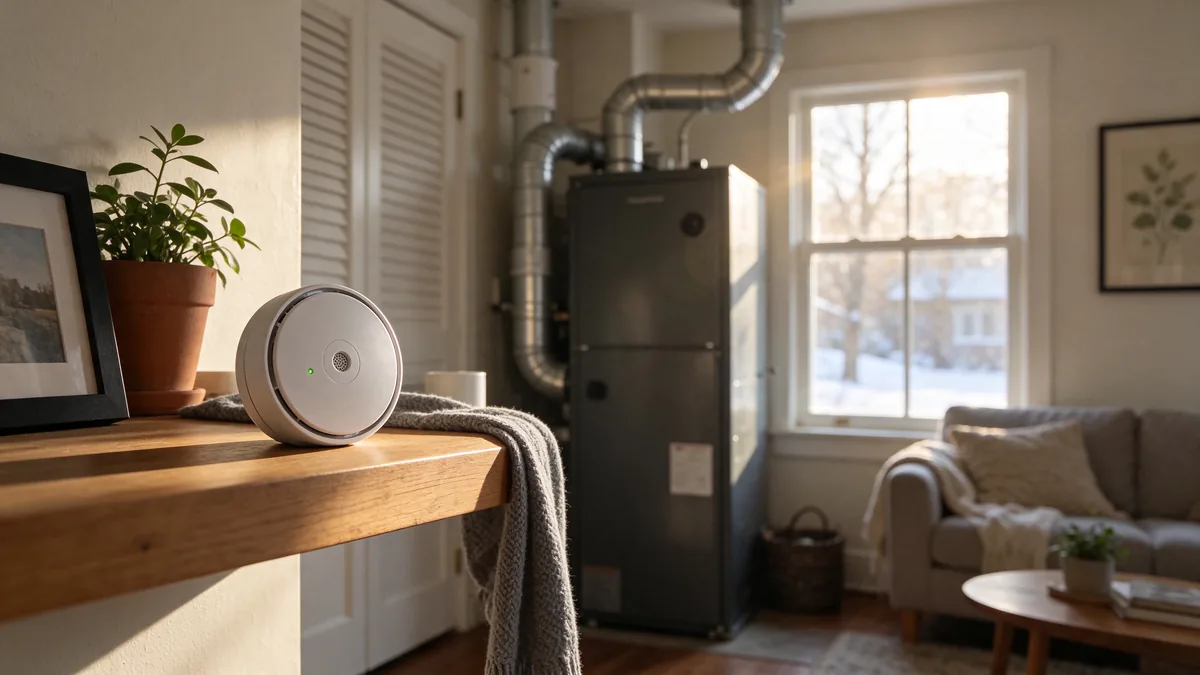
Winter brings closed windows, running furnaces, and occasional power outages. Those conditions can increase the risk of carbon monoxide (CO) poisoning if fuel-burning equipment is faulty, poorly vented, or used in the wrong place.
CO is a colorless, odorless gas. You cannot see or smell it, and high exposure can cause sudden illness or death. The good news is that most household CO risks are preventable with working alarms, regular maintenance, and safe generator habits. [1] [2]
What is carbon monoxide?
Carbon monoxide forms when gasoline, natural gas, propane, oil, wood, or charcoal burns. Common sources include furnaces, water heaters, fireplaces, gas ranges, vehicles, portable generators, grills, and other small engines.
CO poisoning can feel like the flu. Common symptoms include headache, dizziness, weakness, nausea, vomiting, chest pain, shortness of breath, and confusion. Symptoms may improve after you leave a building and return when you go back inside. If several people become sick at the same time, or symptoms occur without a fever, consider CO exposure. [1] [4] [5]
People who are sleeping may not notice symptoms before becoming seriously ill. Infants, older adults, pregnant people, and people with chronic heart disease, anemia, or breathing problems may be more vulnerable. [1] [5]
The most important winter safety steps
1. Install CO alarms correctly
Place battery-operated or battery-backup CO alarms near every sleeping area. CPSC also recommends an alarm on every level of the home, and interconnected alarms are helpful because one alarm can alert people throughout the house. Follow the manufacturer’s placement instructions rather than placing an alarm directly beside a fuel-burning appliance. [1] [2]
Test alarms regularly. Replace batteries as directed, and consider checking them when you change your clocks in the spring and fall. Replace the entire detector according to the manufacturer’s instructions or about every five years when no different lifespan is specified. [1]
An alarm is an important backup, not a substitute for safe equipment and maintenance. If an alarm sounds, treat it as a real emergency even if no one feels sick.

2. Schedule heating-system maintenance
Have your furnace, water heater, fireplace, chimney, and other fuel-burning appliances inspected and serviced by a qualified technician each year. EPA recommends doing this at the beginning of every heating season. Ask the technician to check vents, flues, chimneys, and connections for blockages or leaks. [3]
Keep outdoor vents clear of snow, leaves, nests, and other debris. Never cover a vent to keep cold air out. If you rent, report heating or ventilation problems to your landlord or building manager promptly.
Never use a gas oven or stovetop to heat your home. Do not burn charcoal indoors, use a barbecue inside, or use a camping stove in a room, garage, basement, or tent. These devices can produce dangerous CO even when a space seems large or partly ventilated. [1] [3] [4]
3. Use portable generators safely
A portable generator belongs outdoors only. Place it more than 20 feet from the house, windows, doors, and vents, and point the exhaust away from the building. Never run a generator inside a home, garage, basement, shed, camper, or other enclosed or partly enclosed space. Opening a door or window is not enough to make indoor generator use safe. [1] [2] [5]
Before an outage, read the generator manual and keep extension cords rated for the equipment. Refuel only after the generator has cooled, and follow local fire-safety guidance. A battery-powered or battery-backup CO alarm inside the home adds protection, but it does not make unsafe placement acceptable.

4. Keep vehicles and engines out of enclosed spaces
Never idle a car, truck, snow blower, lawn mower, or other gasoline-powered engine in an attached garage, even with the garage door open. CO can build up quickly and enter the living area. If a vehicle’s exhaust system may be damaged, have it inspected by a qualified mechanic. [1] [3]
After heavy snow, clear snow away from the vehicle’s tailpipe before starting the engine. If you drive an SUV or vehicle with a liftgate open, open windows or vents so exhaust cannot collect inside the passenger area. [1]
What to do if an alarm sounds or someone has symptoms
Act quickly:
- Get everyone, including pets, outside into fresh air immediately.
- Call 911 or your local emergency number from outside.
- If someone has trouble breathing, chest pain, sudden confusion, severe weakness, or has passed out, tell the dispatcher that CO exposure may be involved.
- Do not go back inside until emergency responders or a qualified professional says it is safe.
- Do not ignore an alarm just because symptoms are mild or absent.
If you can do so without putting yourself at risk, turn off a suspected appliance before leaving. Do not spend time searching for the source. EPA advises going to an emergency room when poisoning is suspected and telling the clinician about the possible exposure. A blood test is most useful soon after exposure, so do not delay care while waiting to see whether symptoms improve. [3] [4]
When to See a Doctor
Seek urgent medical care after a suspected CO exposure, even if symptoms improve outdoors. Call 911 for trouble breathing, chest pain, fainting, sudden confusion, severe weakness, or a seizure. Children, pregnant people, older adults, and people with heart, blood, or breathing conditions should be evaluated promptly because they may become seriously ill with less obvious warning signs. [1] [4] [5]
Bottom Line
Carbon monoxide safety starts with prevention: maintain fuel-burning equipment, keep chimneys and vents clear, install alarms near sleeping areas and on every level, and use generators only outdoors more than 20 feet from the home. If an alarm sounds or symptoms suggest exposure, leave immediately, call 911, and do not re-enter until the building is cleared.
References
[1] Carbon Monoxide (CO) Poisoning Basics — Centers for Disease Control and Prevention. Updated October 26, 2026. Accessed November 22, 2026.
[2] Carbon Monoxide Information Center — U.S. Consumer Product Safety Commission. Accessed November 22, 2026.
[3] Protect Your Family from Carbon Monoxide Poisoning — U.S. Environmental Protection Agency. Accessed November 22, 2026.
[4] Carbon monoxide poisoning — NHS. Page reviewed December 16, 2025. Accessed November 22, 2026.
[5] Clinical Guidance for Carbon Monoxide Poisoning Following Disasters and Severe Weather — Centers for Disease Control and Prevention. Reviewed August 21, 2026. Accessed November 22, 2026.
[6] Generator Safety Fact Sheet — Centers for Disease Control and Prevention. Reviewed August 21, 2026. Accessed November 22, 2026.
This article is for general informational purposes only and is not a substitute for professional medical advice, diagnosis, or treatment. Always seek the advice of your physician or other qualified health provider with any questions you may have regarding a medical condition. Never disregard professional medical advice or delay seeking it because of something you have read in this article.

Tinggalkan Balasan