

Many people know they should “eat more fiber,” but the advice can feel vague. Fiber is found in everyday plant foods, and small changes can make a meaningful difference without requiring a special diet.
Fiber is the part of plant food that the body does not fully digest. It helps support regular bowel movements, and higher-fiber eating patterns are associated with better heart and metabolic health. The goal is not to add a huge amount overnight. A steady, food-first approach is usually easier to tolerate and maintain.
How much fiber do you need?
There is no single target that fits every adult. U.S. guidance commonly uses about 14 grams of fiber per 1,000 calories, which is often summarized as 25 grams a day for women and 38 grams for men. Mayo Clinic also lists age-based targets: 25 grams for women age 50 or younger, 21 grams for women over 50, 38 grams for men age 50 or younger, and 30 grams for men over 50.
These numbers are useful reference points, not a reason to worry about one day of eating. Your calorie needs, age, sex, activity, medical conditions, and usual diet all matter. If you currently eat little fiber, start by adding one change rather than trying to reach the full target immediately.
Start with foods you already enjoy
Fiber comes naturally from fruits, vegetables, whole grains, beans, peas, lentils, nuts, and seeds. Most high-fiber plant foods contain a mix of soluble and insoluble fiber. Soluble fiber absorbs water and can form a gel during digestion. Insoluble fiber adds bulk to stool and helps food move through the digestive tract. Eating a variety of foods is more practical than trying to track each type.
Try one of these easy swaps:
- Choose oatmeal or a higher-fiber whole-grain cereal instead of a low-fiber breakfast.
- Replace some white bread, white rice, or regular pasta with whole-wheat bread, brown rice, barley, bulgur, or whole-wheat pasta.
- Add beans, lentils, or chickpeas to soup, chili, salad, tacos, or a grain bowl.
- Keep the edible skin on foods such as apples, pears, and potatoes when appropriate and well washed.
- Add vegetables to familiar meals rather than treating them as a separate project.
- Snack on fruit, unsalted nuts, seeds, vegetables with hummus, or air-popped popcorn.
The best choice is the one you will repeat. Frozen and canned produce can also count. If you use canned beans or vegetables, rinsing them can reduce some of the added sodium.
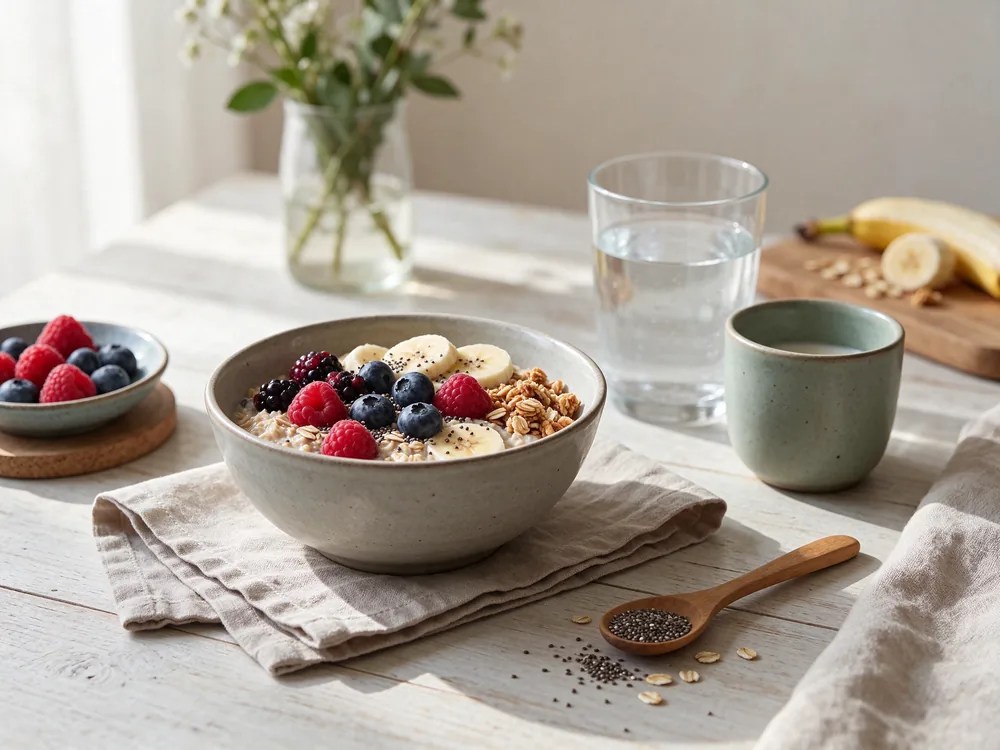
AI-generated illustration: A breakfast built around oats, fruit, seeds, and water.
Increase fiber slowly
A sudden jump from a low-fiber diet to a very high-fiber diet can cause gas, bloating, or cramping. The bacteria in your digestive system need time to adjust. Add one serving of a fiber-rich food every few days, or increase portions gradually over a few weeks.
For example, you might add fruit to breakfast first. After several days, try beans at lunch. Later, replace one refined grain with a whole grain. Pay attention to how you feel, and slow down if discomfort is persistent.
Drinking enough fluid matters because fiber absorbs water. A higher-fiber diet without adequate fluid may make stools harder for some people. There is no universal water prescription for everyone, so consider your thirst, climate, activity, and any fluid limits recommended by your clinician. If you have heart, kidney, or liver disease and have been told to restrict fluids, ask your healthcare professional before making a large change.
Build a simple high-fiber day
You do not need complicated recipes. A day might look like this:
- Breakfast: Oatmeal topped with berries and a spoonful of seeds.
- Lunch: A whole-grain wrap or bowl with lentils, vegetables, and a protein you enjoy.
- Snack: An apple with unsalted nuts, or carrots with hummus.
- Dinner: Brown rice or a skin-on potato with vegetables and beans, fish, eggs, tofu, or another preferred protein.
These are examples, not a prescription. Cultural foods and family recipes can be excellent sources of fiber when they include beans, vegetables, fruit, whole grains, nuts, or seeds. The NHS recommends aiming for a variety of sources rather than relying on one food.
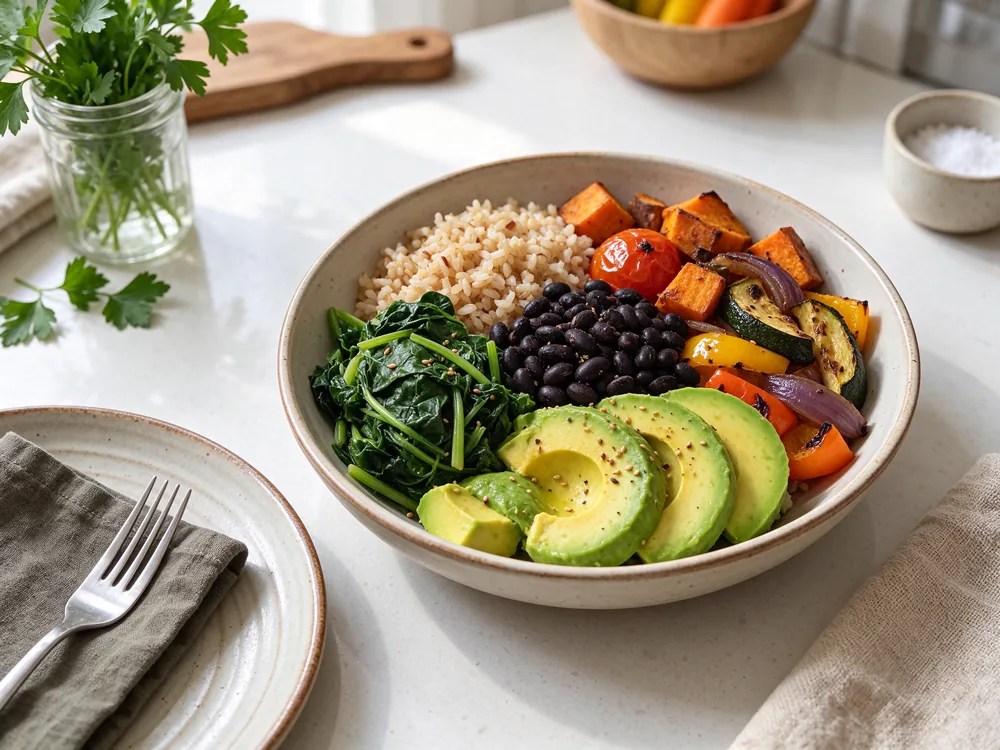
AI-generated illustration: Beans, whole grains, vegetables, and avocado in a balanced everyday meal.
Should you use a fiber supplement?
Whole foods are generally the first choice because they provide fiber along with vitamins, minerals, and other useful plant compounds. A healthcare professional may recommend a supplement for a specific condition or when food changes are not enough. Supplements can also cause gas or interact with some medicines, so do not start one simply because a label promises a “cleanse” or a quick fix. Ask a clinician or pharmacist if you are considering a supplement, especially if you take regular medicines or have a digestive condition.
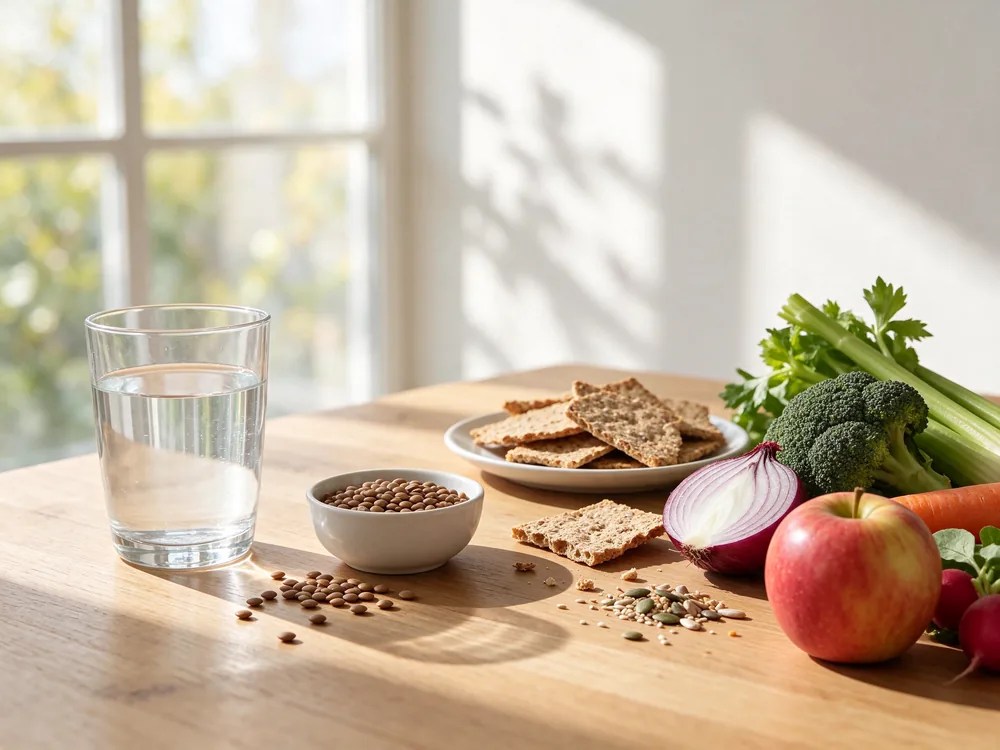
AI-generated illustration: Water alongside fiber-rich foods highlights the value of gradual changes and hydration.
When to see a doctor
Talk with a healthcare professional if constipation continues despite reasonable diet and fluid changes, keeps returning, or interferes with daily life. Seek prompt medical care for blood in the stool, black stools, severe or ongoing abdominal pain, repeated vomiting, fever, a swollen abdomen, or unexplained weight loss. These symptoms can have many causes and should not be self-treated with extra fiber alone.
If you have recently had intestinal surgery, have a bowel narrowing, or have been told to follow a low-fiber diet for a medical reason, ask your care team before increasing fiber. The right amount can depend on your condition and treatment plan.
Bottom line
The simplest way to eat more fiber is to add more plants in familiar forms: oats at breakfast, fruit as a snack, beans or lentils at lunch, vegetables with dinner, and whole grains when convenient. Increase gradually, drink fluids appropriate for your health needs, and choose variety over perfection. A higher-fiber pattern can support digestion and overall health, but it is one part of a balanced diet—not a cure-all.
References
- Dietary fiber: Essential for a healthy diet — Mayo Clinic. Accessed November 20, 2026.
- How to get more fibre into your diet — NHS. Accessed November 20, 2026.
- The Role of Dietary Fiber in Health Promotion and Disease Prevention — StatPearls, NCBI Bookshelf. Accessed November 20, 2026.
- Dietary Guidelines for Americans — U.S. Department of Agriculture and U.S. Department of Health and Human Services. Accessed November 20, 2026.
This article is for general informational purposes only and is not a substitute for professional medical advice, diagnosis, or treatment. Always seek the advice of your physician or other qualified health provider with any questions you may have regarding a medical condition. Never disregard professional medical advice or delay seeking it because of something you have read in this article.

Tinggalkan Balasan